Aquamarine
Meaning & Jewellery.
Learn what Aquamarine is, how its colour and pattern form, what to check when buying it, how to care for it and how it is used in jewellery.
This guide separates established mineral names from jewellery trade names. Material, treatment and source can vary between suppliers, so the exact beads in a finished piece should always take priority.
What is Aquamarine?
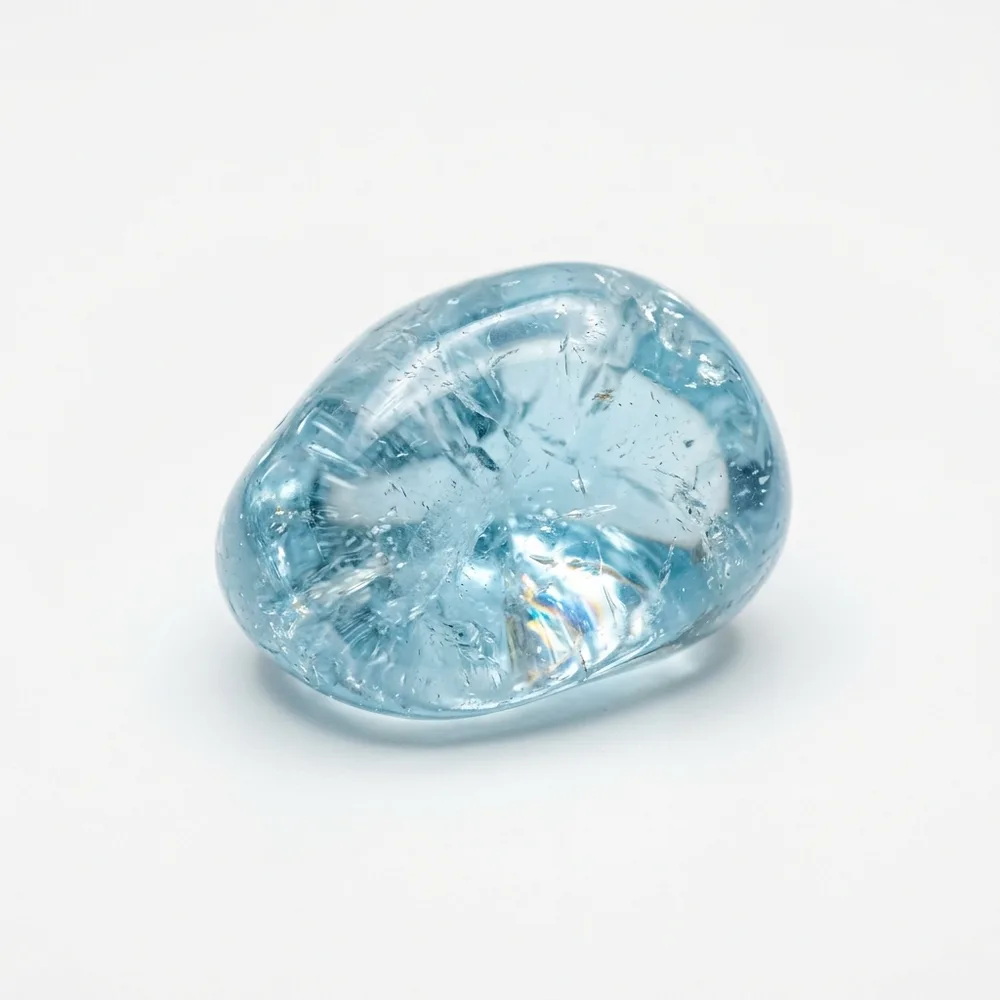
Aquamarine is the blue to blue-green variety of beryl, the same mineral family as emerald. Its name comes from the Latin for seawater.
Colour, pattern and what to look for
Fine aquamarine is valued for a clear blue to slightly greenish-blue colour. Small bead material is often paler than large cut stones, and natural inclusions are evidence of formation rather than a promise of quality.
Traditional meanings of Aquamarine
In crystal traditions, Aquamarine is associated with healing. Meanings vary between traditions and can be a personal way of choosing a gift or marking an intention.
These associations describe beliefs and symbolism, rather than established medical effects. Jewellery does not treat health conditions.
Make it yours
Choose Aquamarine jewellery
See the finished designs that currently use Aquamarine, or ask Shirley to create a custom piece around this stone and your preferred size.
Care and buying notes for Aquamarine
Aquamarine is Mohs 7.5–8 and generally durable, but warm soapy water is the safest cleaning method. Protect it from hard knocks and avoid heat if the material has fractures or a treatment.
For treatment questions, read the guide to natural, dyed and imitation gemstones and ask Shirley about the materials in a particular design. If you want a different combination or size, use the custom crystal bracelet builder.